.svg)
No items found.


The Centre for Health and Care Innovation Research (CHIR) is a unique interdisciplinary venture, jointly set up in January 2019 by The Bayes Business School and the School of Health & Psychological Sciences at City St George’s, University of London.

Dr Charitini Stavropoulou and Professor Harry Scarbrough came to us to help clarify the centre's wide-ranging expertise – from health economics and behavioural science to data modelling and implementation – for a diverse audience of policymakers, innovators and practitioners.
We collaborated with them to agree their core purpose and build a powerful new identity. This strategic foundation has supported their growth from a team of six to over twenty researchers, helping the team attract new collaborations and increase their research, educational and health and care impact.
”The proposal is very clear and well-aligned with our vision. We were particularly impressed by both the design and your understanding of our Centre‘s goals. We're all excited – thanks for your brilliant work!”
We ran a series of workshops with the team to understand their ambition and their existing communication material. This helped the team identify a clear vision and missions, and provided them with a visual identity and a communication strategy that helped them to develop and grow.
Our work included an identity that focuses on ’people’ as the heart of innovation and used a range of distinct colours and icons to represent health and care innovation in a new way – through diversity, connectivity and reach.
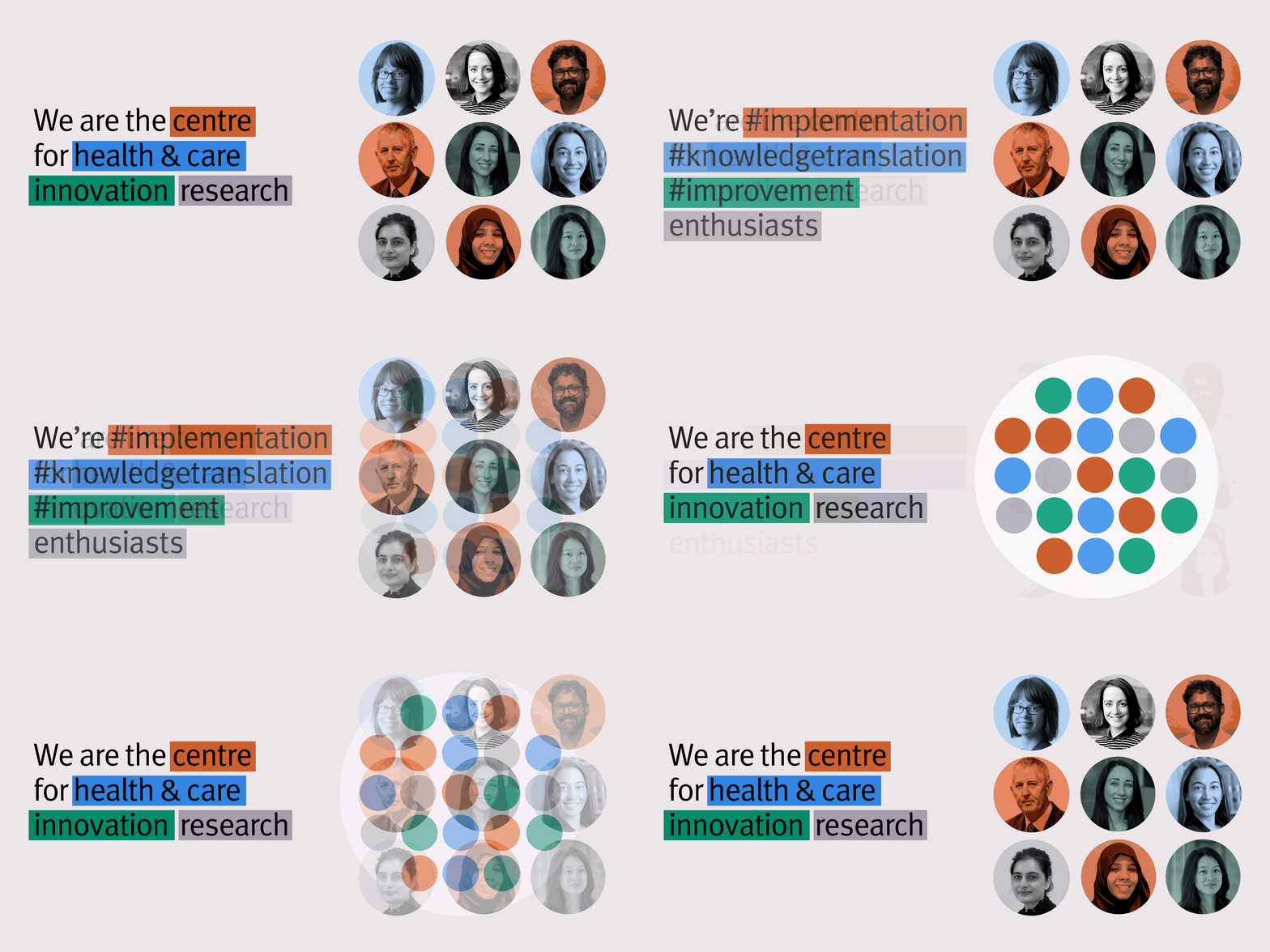
We developed a new call to action – ‘joining the dots between innovation, policy and practice’ – and created an engaging visual language that could be used across a range of activities: on their website, through reports and policy notes and in social media.
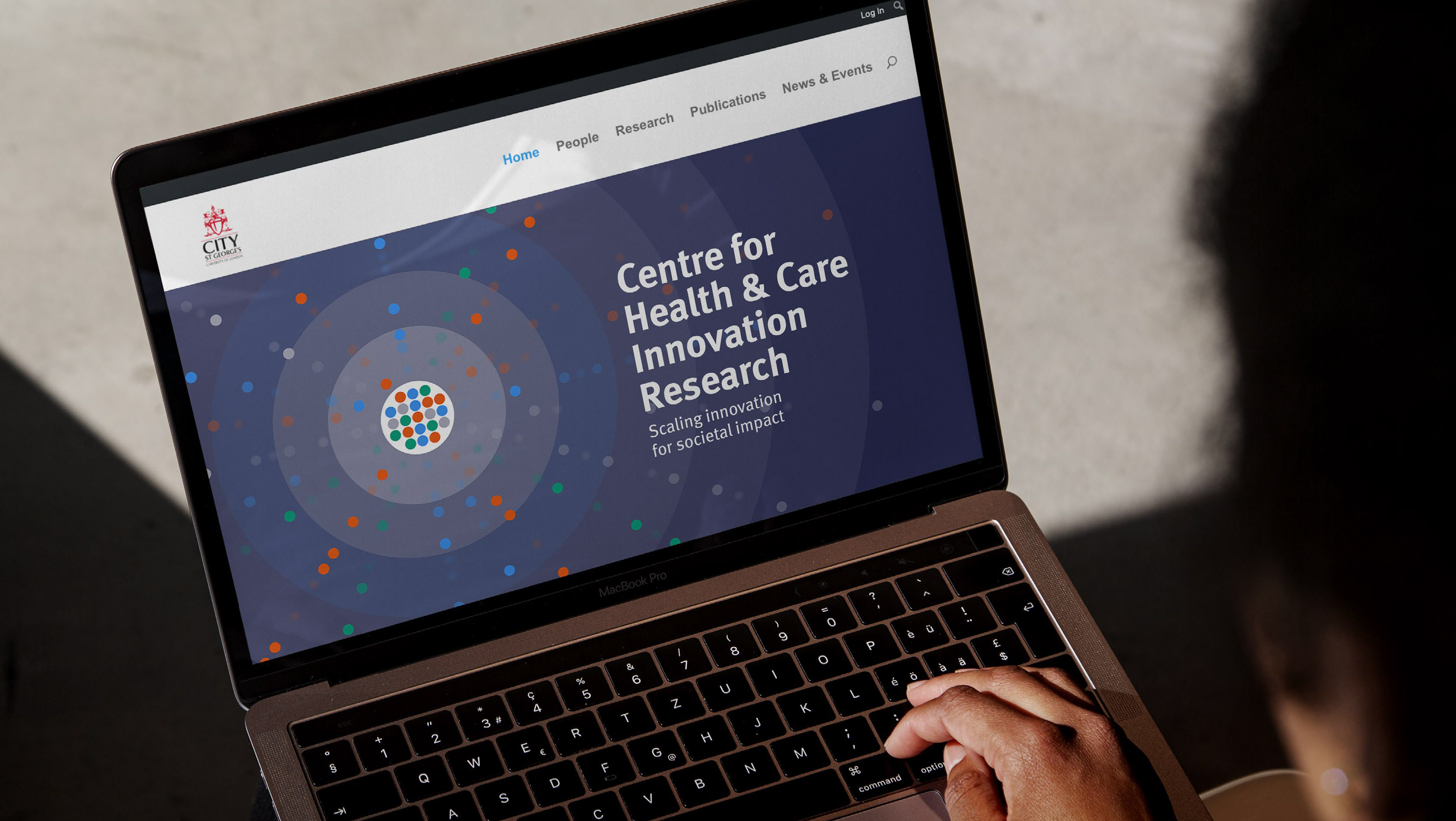
To help the team get started, we provided a guide to ensure consistency, along with a presentation template, social media templates, an annual report and infographics that can be used and refined over time.
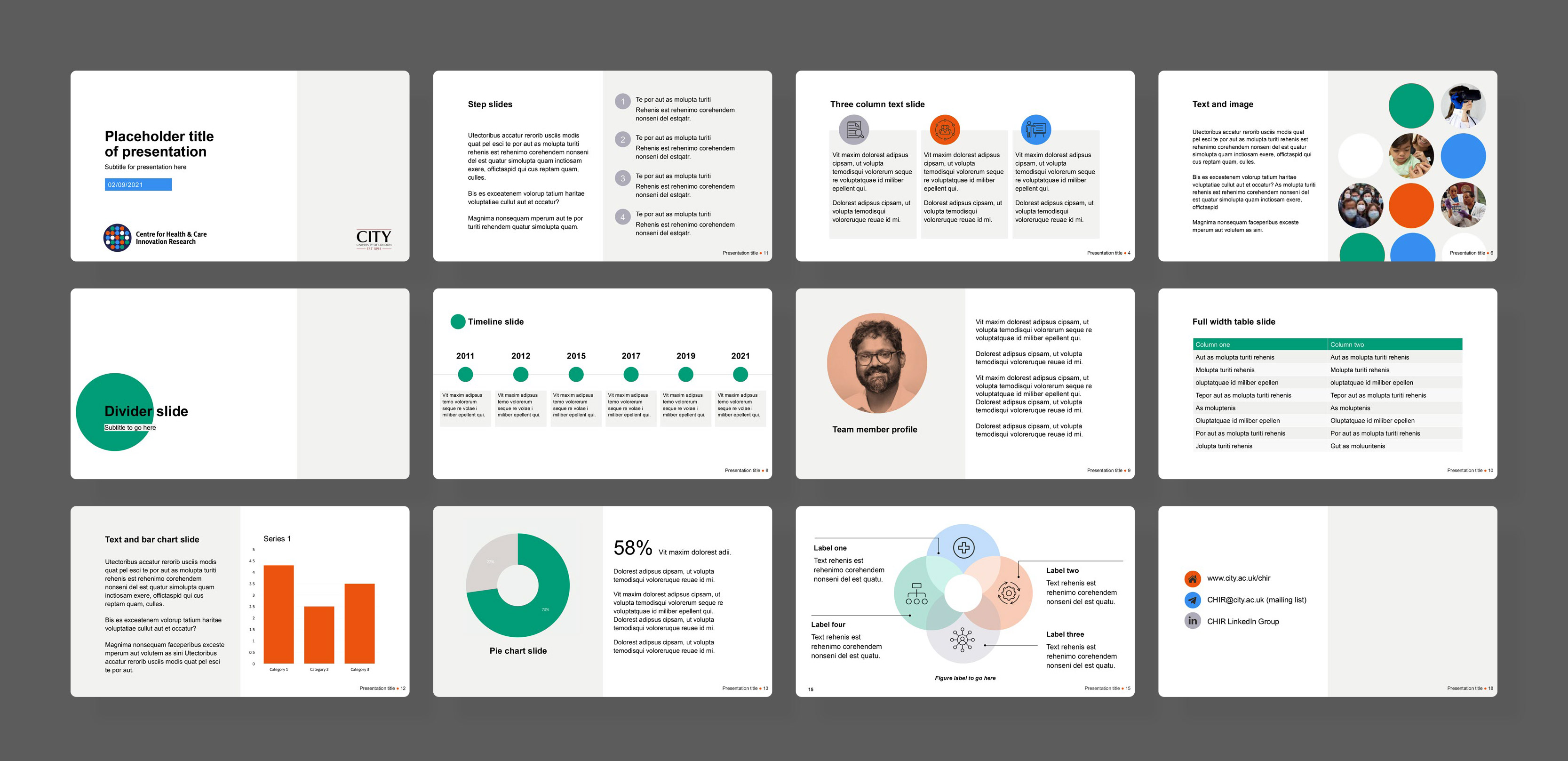
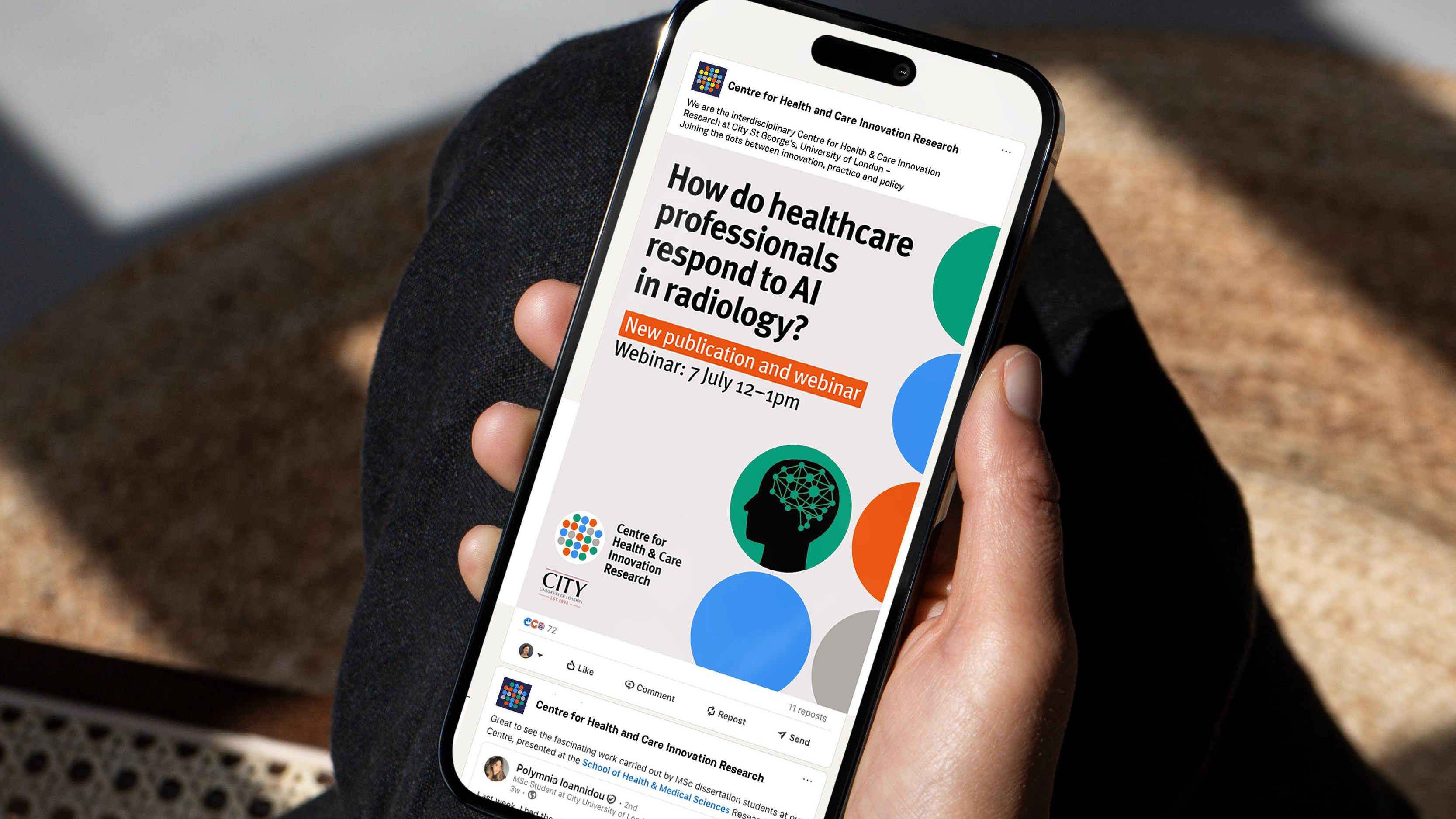
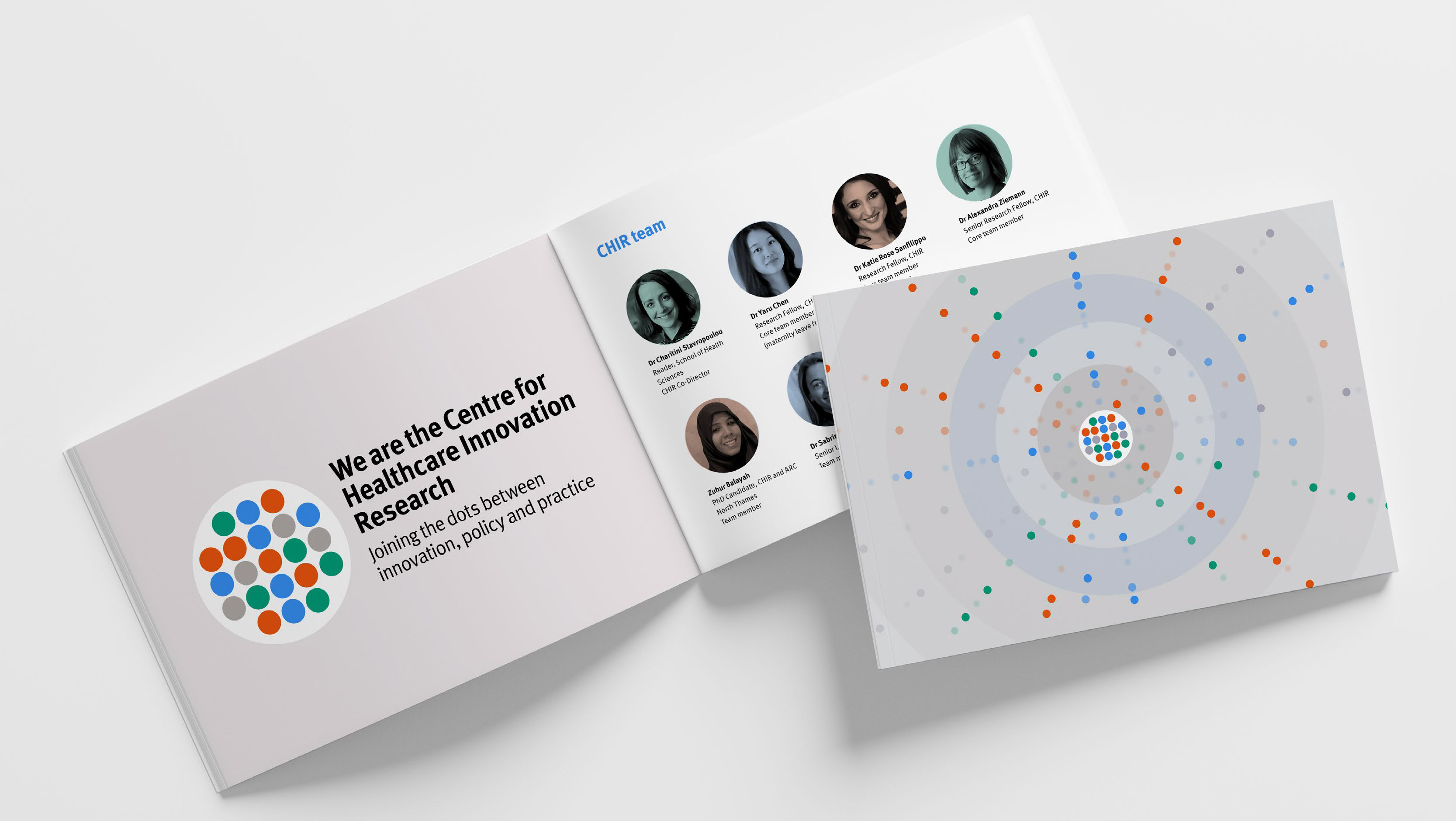
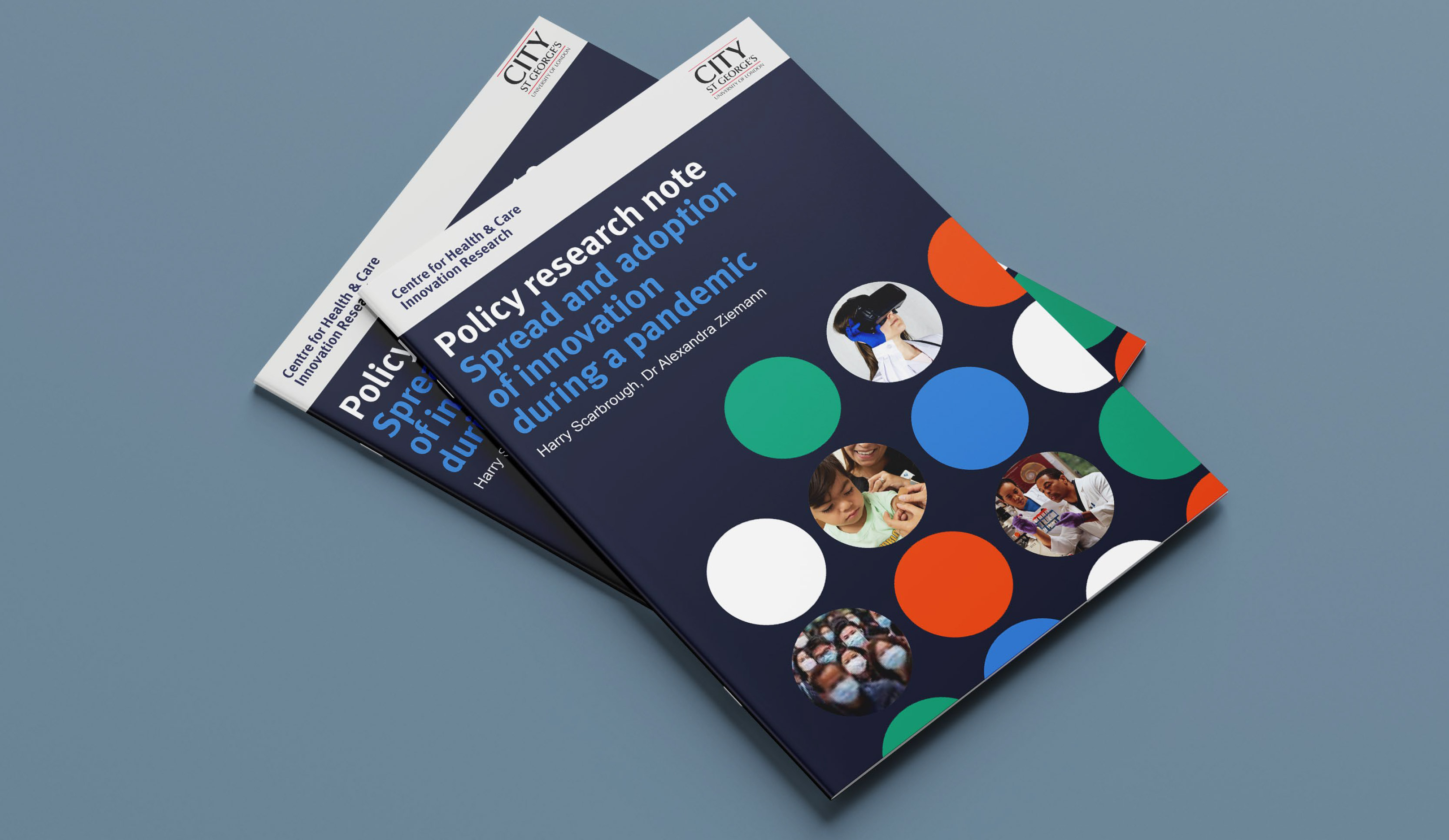
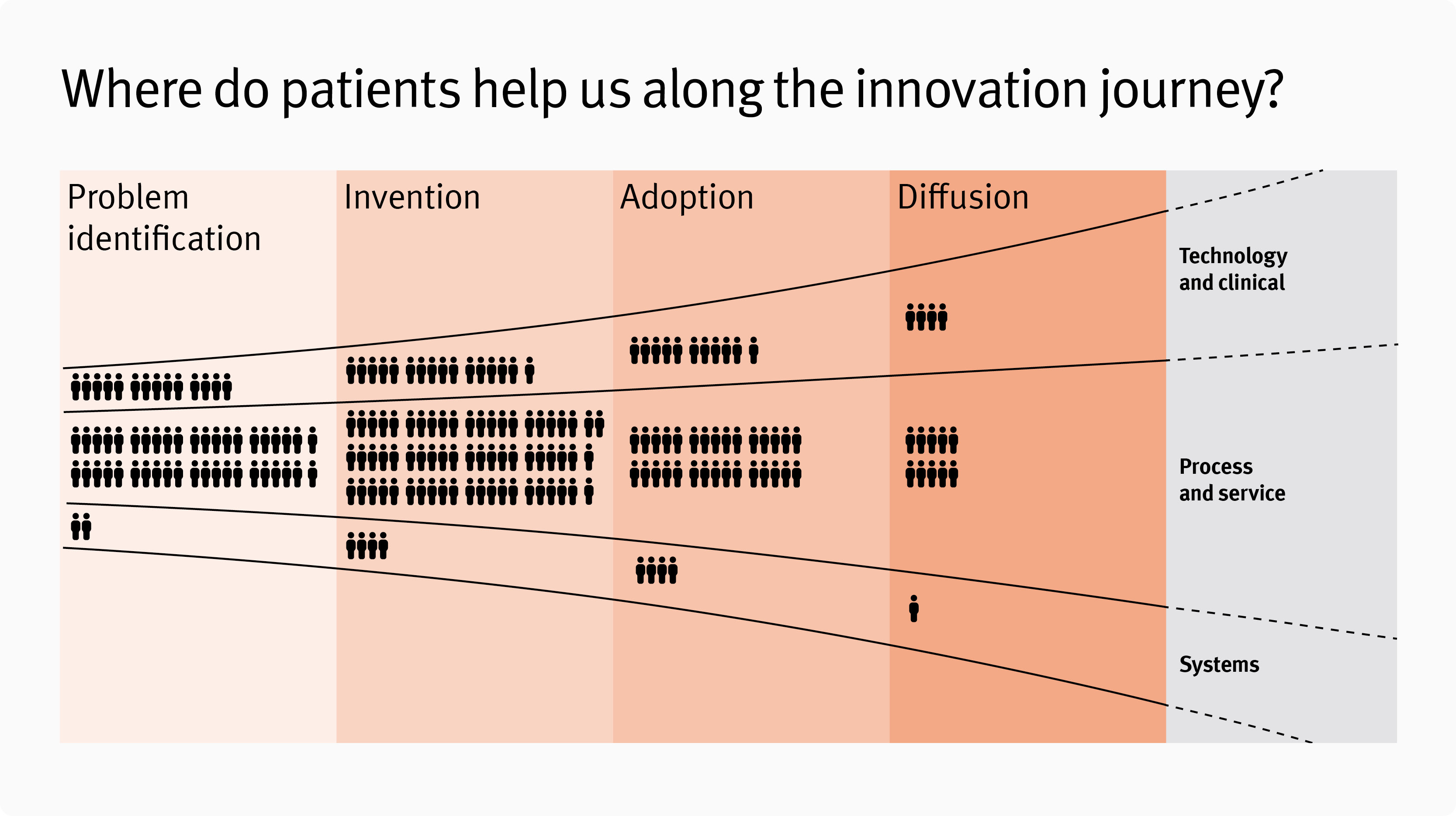
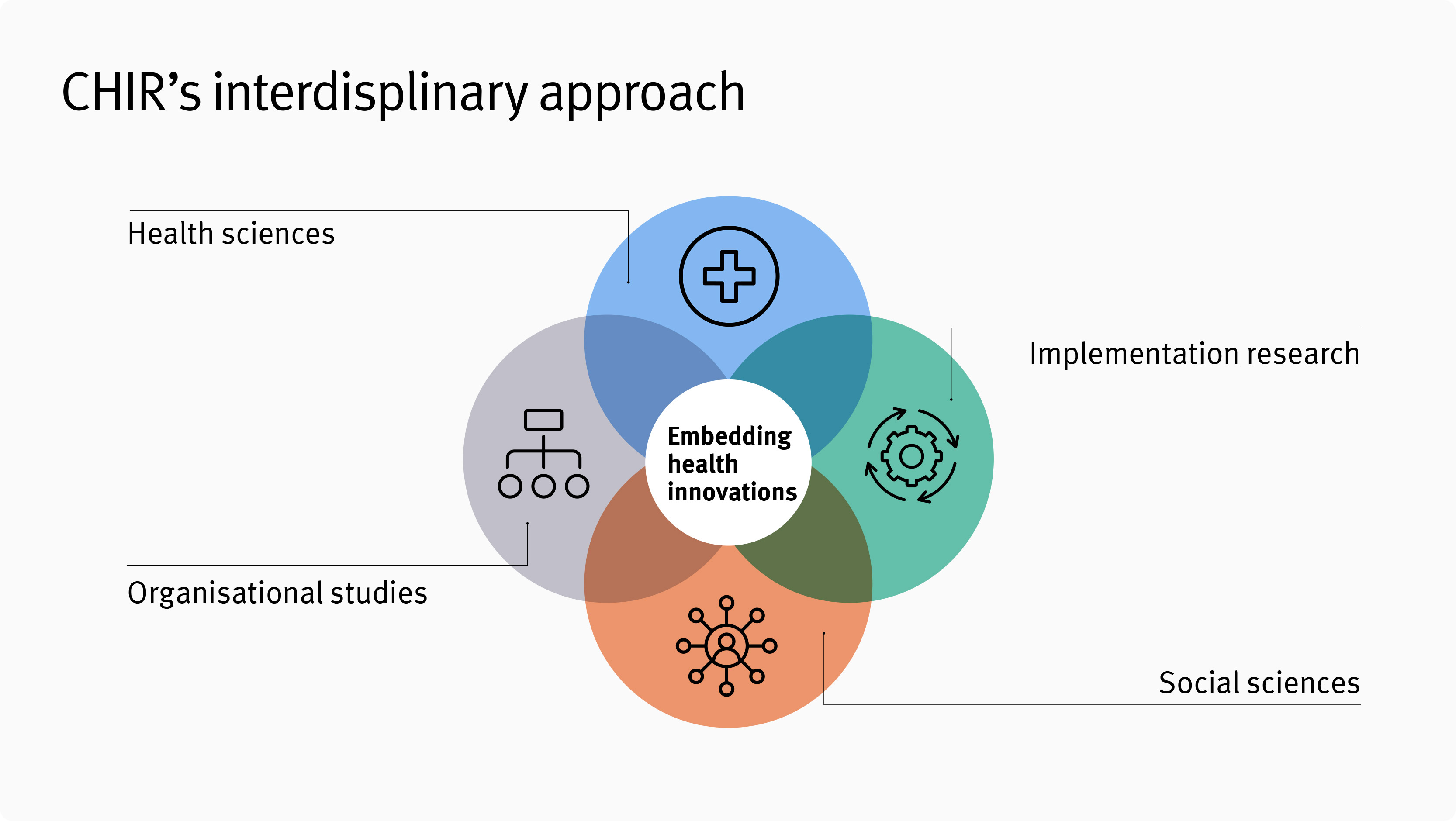
“We love the guide. As non-design experts it will enable us to make best use of the design assets and get the branding right‘


Once the team had launched, they asked us to support the development of their five year strategy. This included running roadmap and creative development activities that led to the creation of innovation labs across a number of overlapping but distinct focus areas:
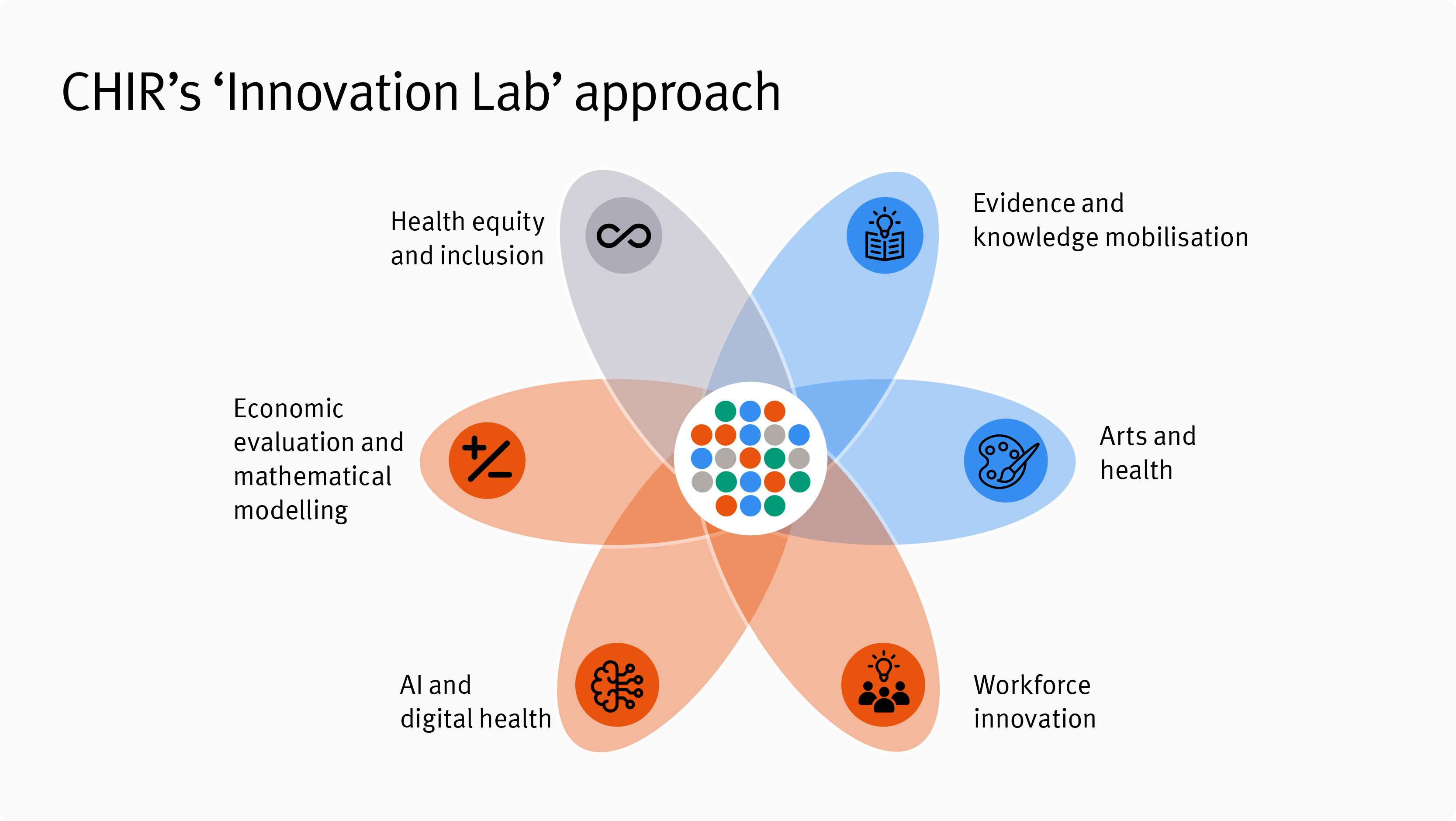
This not only gave them strategic direction but also supported the leadership and development needs of the next generation of research leaders.
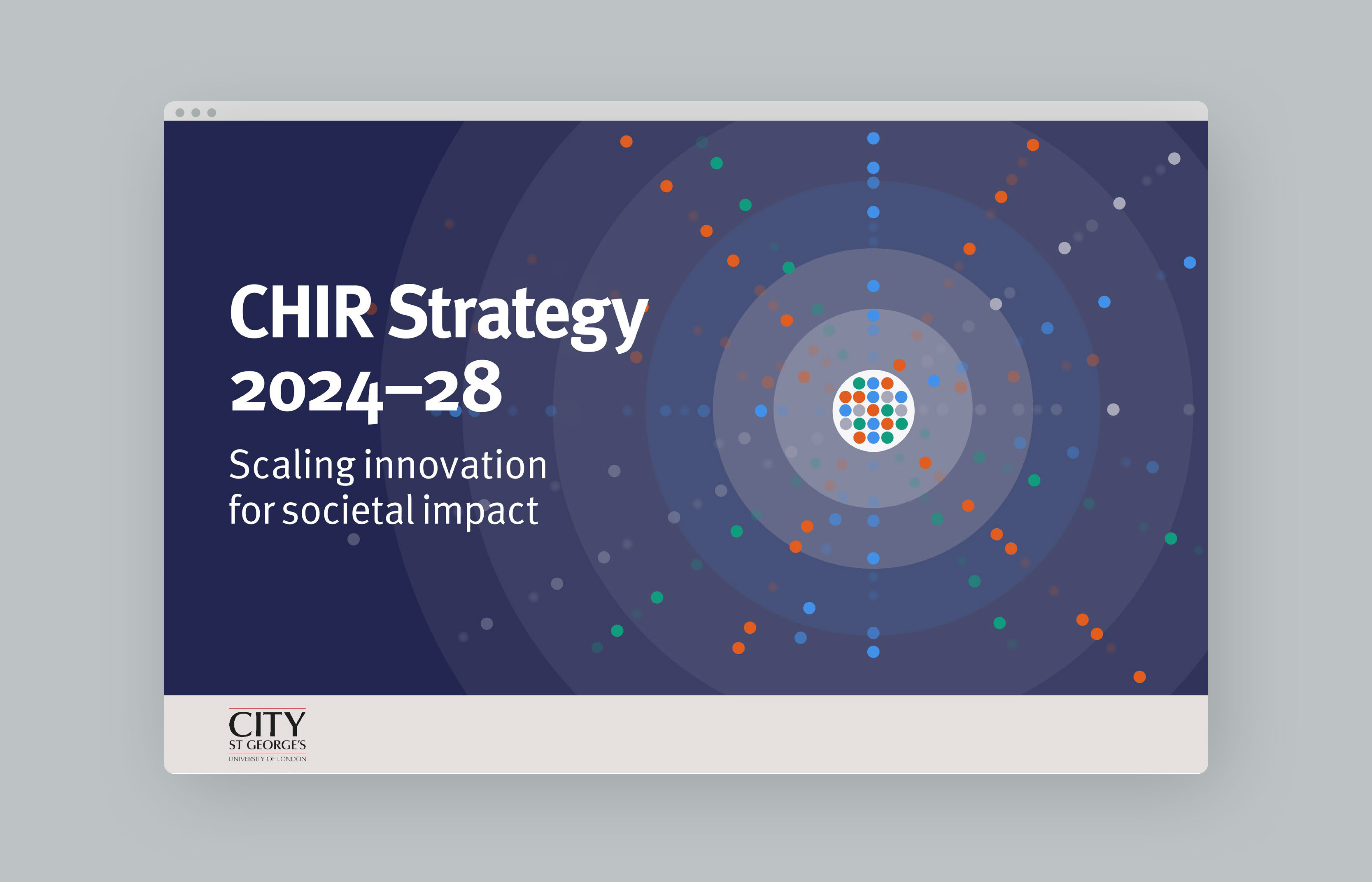
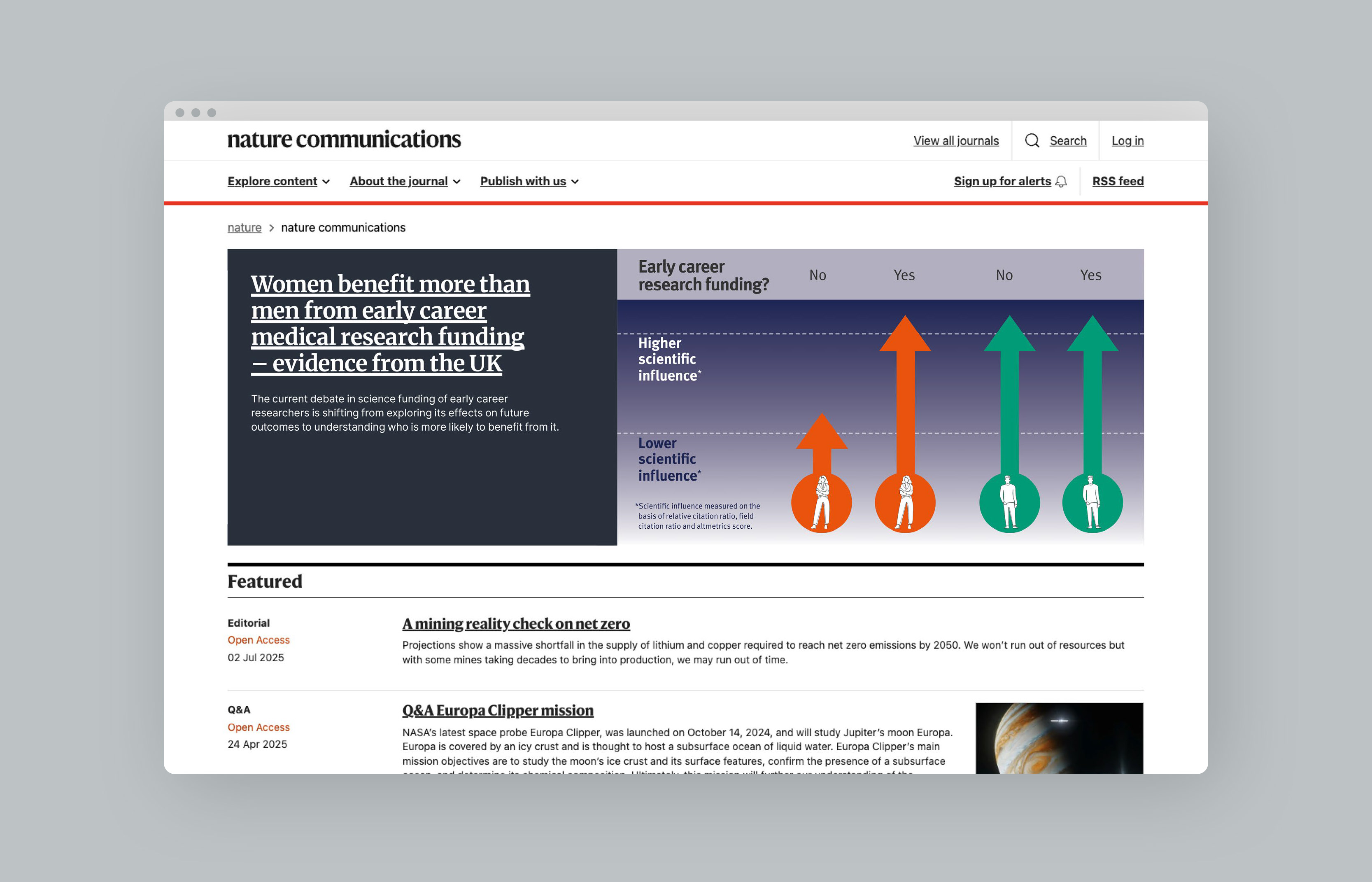
While the work has been strategic we have also be fortunate to be involved in the design of project interventions including proactive care, navigating medical research, supporting events at the British Medical Association, an NHSInSites evaluation report and a Nature Communications feature.
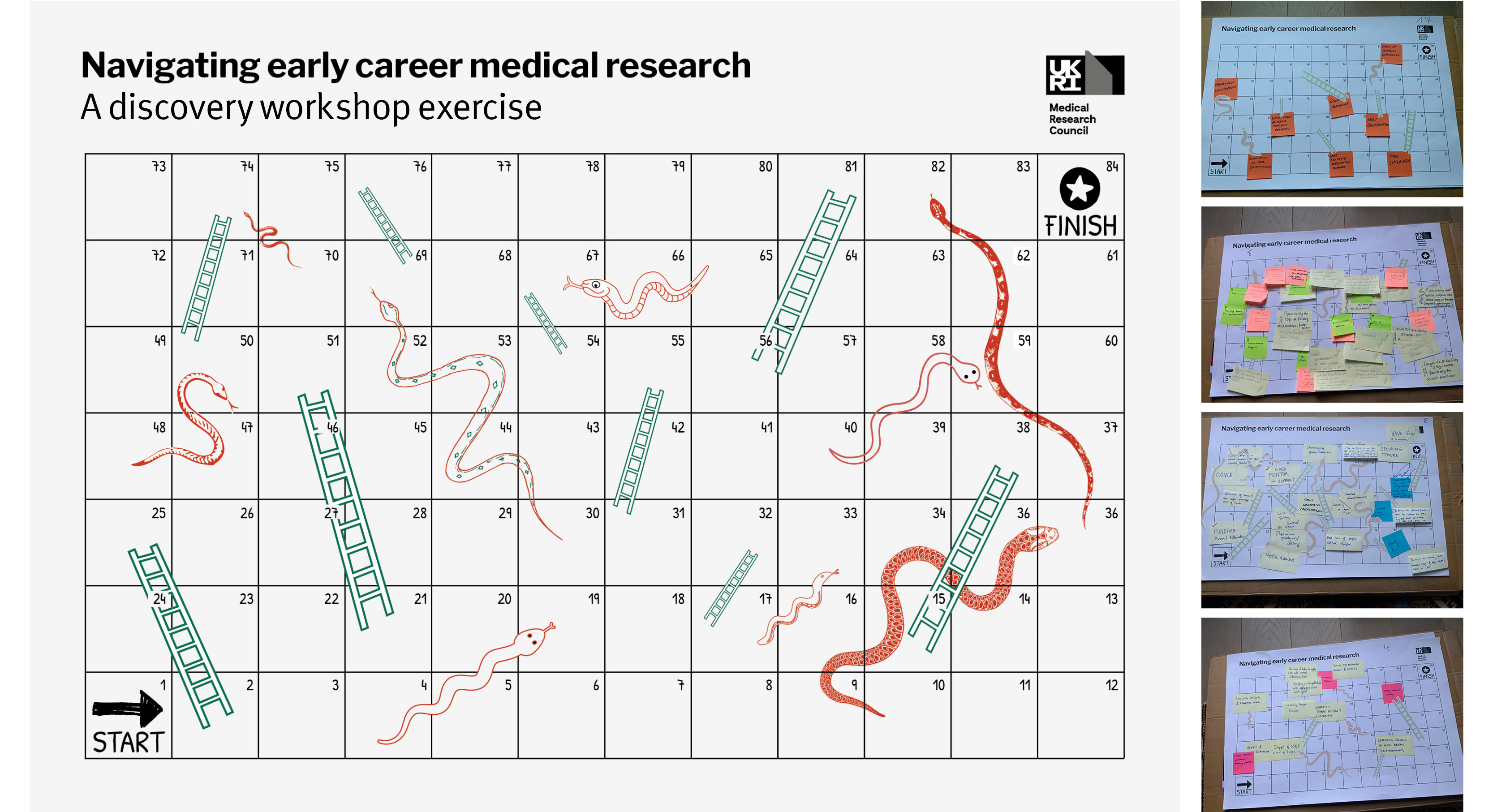
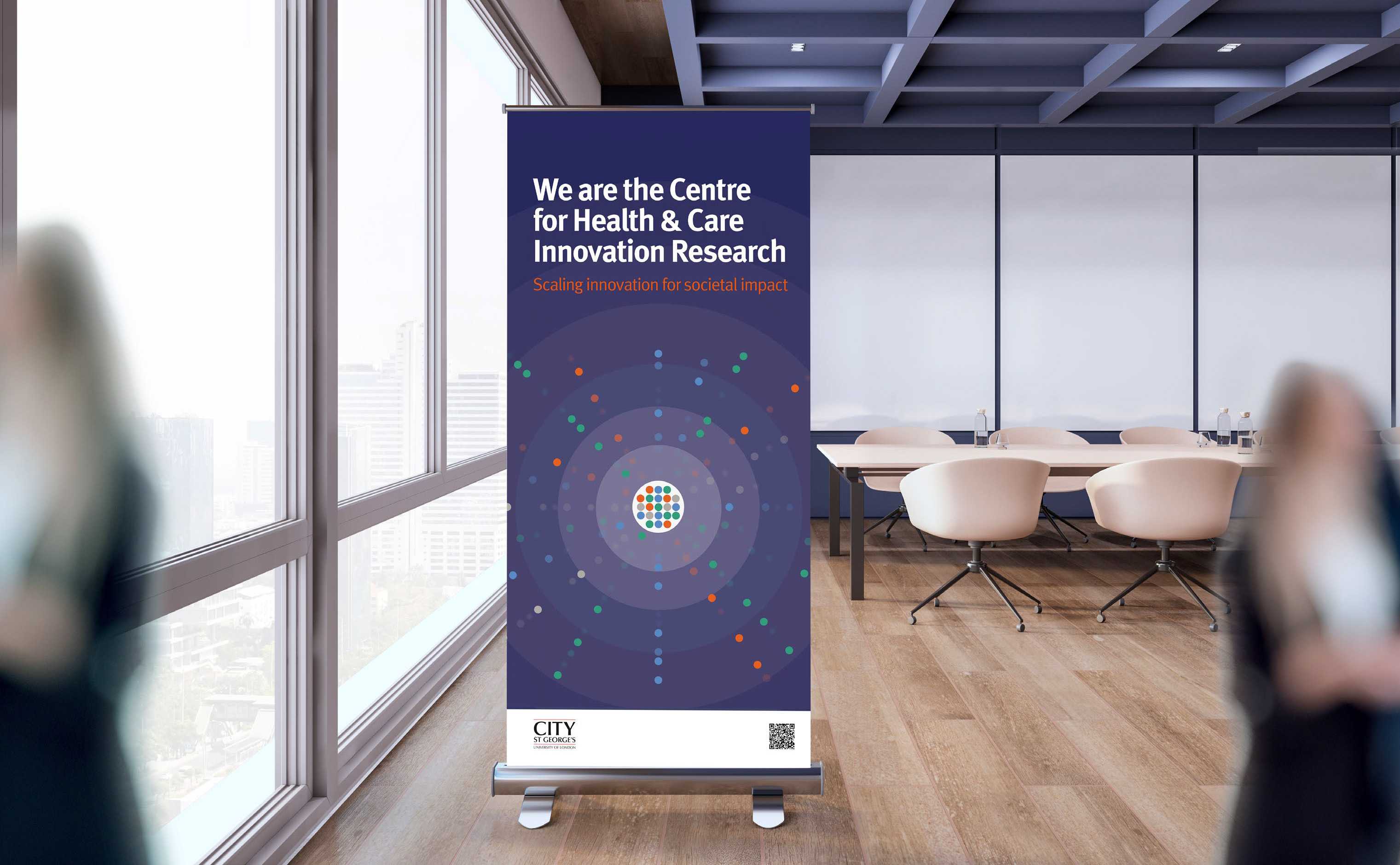
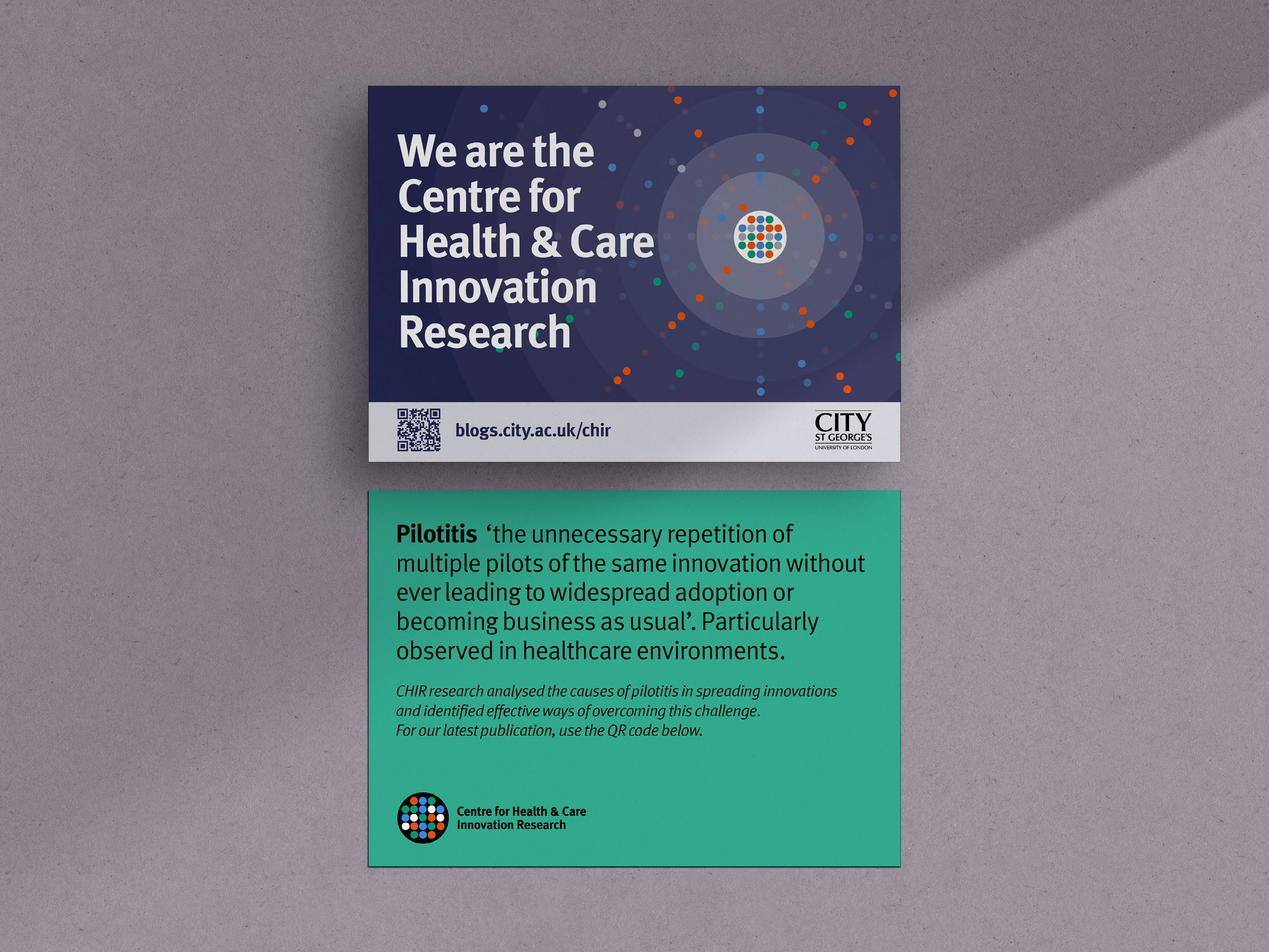
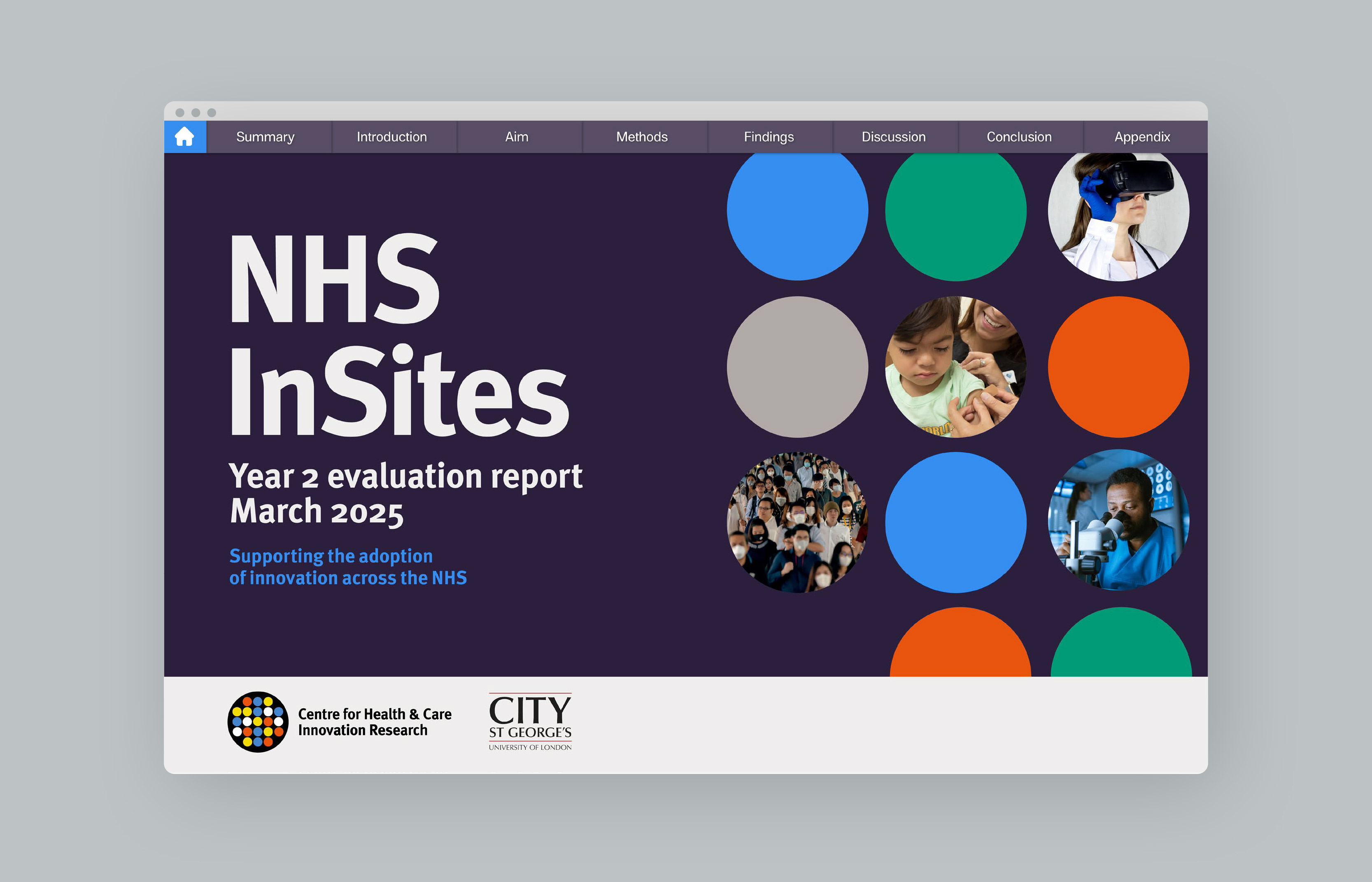
We used creative design approaches to engage with the team, identify key goals and bring these to life through language and visual imagery. We also dug deeper into their work to help the team communicate some of the complex ideas that underpin their work and showed that consistency and clarity can help the team make connections that go beyond shared interests to shared understanding.
As always, we learnt from this project. We are keen to ensure that ideas around innovation ’stickiness and spread’ can be used in other projects and would love to work with other interdisciplinary teams that build bridges between different knowledge, worlds and mindsets.